A small practice for meeting heartbreak without drowning in it
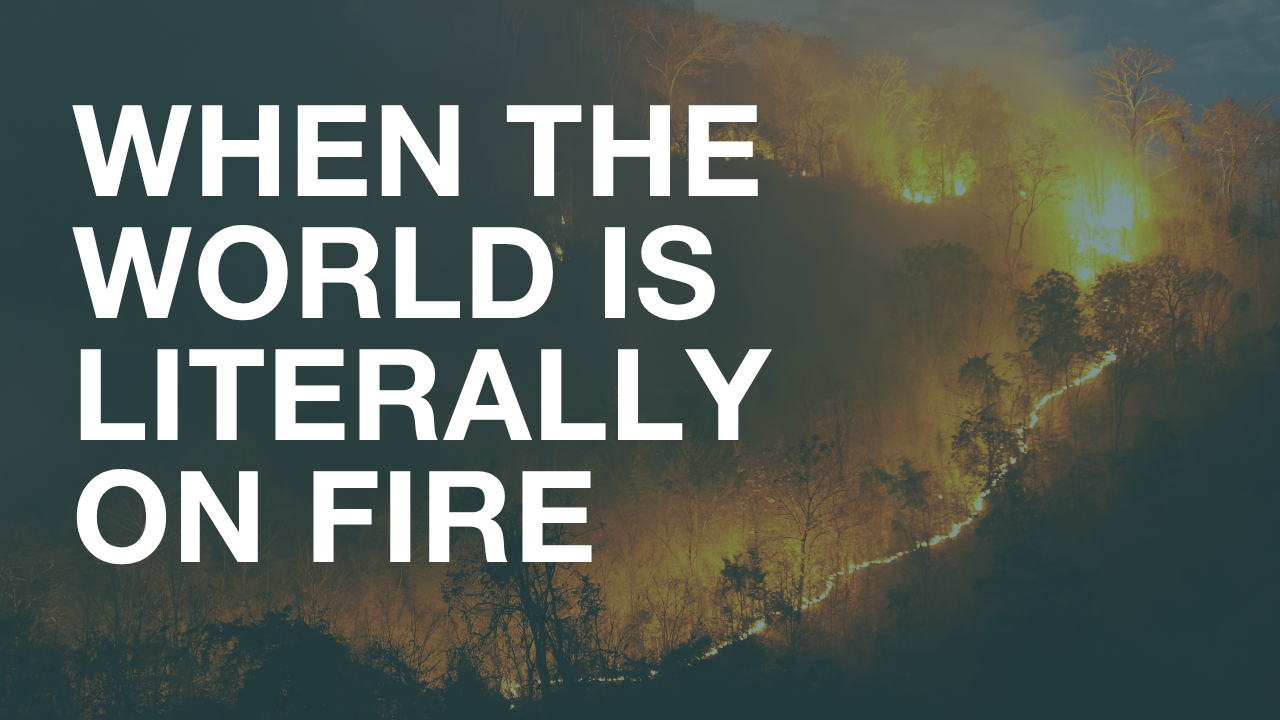
This week in Toronto (and many other places in Canada and the U.S.), the heatwave and blocked-out sun have created a deeply eerie end-of-days vibe.
Right now, 850 wildfires are burning across Canada, with many of them raging in Northwestern Ontario, Manitoba, and Saskatchewan. More than 6 million acres have already burned this year.
That number is hard to even wrap our hearts around.
And beyond the staggering loss of land, I’m crushed thinking about all the animals who are being devoured by these fires, and with the First Nations communities being evacuated, displaced, and in some cases, devastated completely. Namaygoosisagagun First Nation was reportedly destroyed in under an hour.
In a situation like this—where the scale of suffering is so vast, and the environmental degradation that contributed to it is so deeply systemic—it’s very easy to feel powerless.
So, what’s a changemaker to do?
First, I think we have to make space in our days, our conversations, and our hearts to actually feel and grieve what’s happening.
For the forests. For the animals. For the waters. For the people. For our future. Because refusing to feel the pain of a world literally on fire might seem like self-protection, but over time that kind of checking out can cut you off from the very aliveness you’re trying to guard.
But it’s also important not to stop at feeling.
Research on empathy and compassion suggests that when our only response to suffering is to feel it, our brains can get stuck in empathic distress—basically marinating in pain with no clear place for it to go. But when we take some action of care—even a small one—the helping systems in the brain get activated, which stimulates our reward circuitry. This can move us from “I’m drowning in the suffering of the world” into a more spacious, steady, and resourced state.
And that matters because those are the kinds of inner conditions we need if we’re going to keep showing up with clarity, courage, and a nervous system that’s not rocking in the fetal position.
This is part of what pulls so many of us into changemaking in the first place. Somewhere along the way, we discovered that taking action can help metabolize the pain of loving this world. Action gives our heartbreak somewhere to go.
But what if there’s no direct action you can take right this second?
Or what if you’re already doing so much in one area of suffering that taking on one more energy-intensive crisis would dropkick you into August?
That’s where a micro-practice I call sending care can help.
It’s small. It’s internal. It’s not meant to totally replace tangible action. But it can start to move you from empathy paralysis into that more expansive helping state.
Here’s how to try it:
1
Take an inhale and gently let yourself connect with the pain of the situation.
2
On the exhale, imagine sending care to those who are suffering.
You might focus on an individual, a community, a group of animals, a forest, or all beings impacted by the fires.
The care you send might have a specific flavor: love, rain, protection, relief, protection.
3
You can pair this care with a simple wish, like:
May you have peace.
I’m holding you in my heart.
May you be free from suffering.
Of course, the beings you’re sending care to may never know you did this. Some may never escape their suffering. Some may have already died because of it. and that’s devastating.
But this small inner action can still matter. Not because it magically fixes the devastation, but because it helps move your own system from helpless distress into the more spacious energy of care.
And that more expansive state is far more fertile ground for the kind of tangible, strategic action that can actually help change the world.
Speaking of which, here are a few larger actions you can take around the wildfires and the climate crisis:
- Donate to wildfire relief efforts, especially those supporting First Nations communities, evacuees, and animals affected by the fires. Some options include the Canadian Red Cross Indigenous Communities Fund, Anishinabek Nation 7th Generation Charity (accepting donations for Namaygoosisagagun First Nation), or wildlife rehabilitation centers.
- Call or email your federal representative and tell them the climate crisis needs to be treated like the emergency it is.
- Incorporate more plant-based meals into your life. Animal agriculture is one of the major drivers of environmental destruction, and shifting our food systems matters.
- Sign up for the newsletter of an environmental organization doing strong climate and environmental justice work—like Ecojustice, Friends of the Earth U.S., David Suzuki Foundation, Greenpeace International, or Environmental Defence Canada—and then (revolutionary concept) actually read it.
- Share a post about the link between climate change, environmental destruction, and worsening wildfire seasons.
- Cut down on fossil fuel use where you can. For example, pledge to take one less flight this year, park your car and take public transit once a week, or try to limit your use of food packaging and takeout plastics.
None of these actions alone will solve the crisis, but activism has never been about one perfect action that fixes everything. It’s about refusing to let our heartbreak puddle into helplessness, and instead letting our care become movement.
I’d love to hear if you try the practice of sending care, OR if you’re pledging to one of the bigger actions above. Please leave me a comment and let me know.
Hugs, Kimberly